University education is the foundation for shaping skilled, knowledgeable, and responsible individuals who contribute meaningfully to society.
Enroll Now Country Guide
An empire's history, an oil-funded present, and the BELTP government programme — a complete guide for South African teachers, with Reading, Video, and Audio.

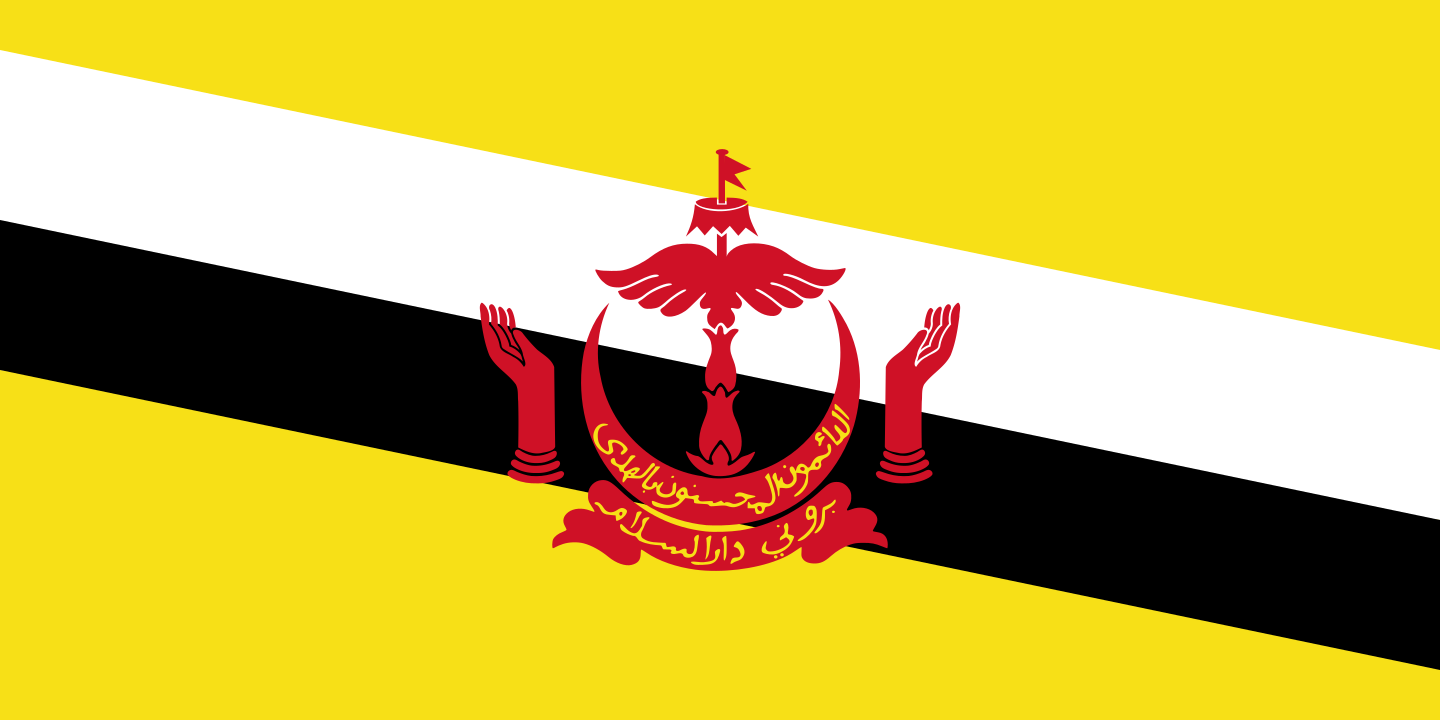
An empire on Borneo. The Sultanate was founded in the 14th century, and by the 16th century, under Sultan Bolkiah, the Bruneian Empire controlled large stretches of northwest Borneo and reached as far as Manila. Britain became a protectorate in 1888; Brunei chose not to join Malaysia in 1963, gaining full independence in 1984.
Sultan Hassanal Bolkiah has reigned since 1967, one of the world's longest-serving monarchs, over one of the world's few remaining absolute monarchies. Brunei's modern wealth comes overwhelmingly from oil and gas, funding a very high standard of living, free education, and free healthcare for citizens.
In 2014, Brunei began phasing in a Sharia-based penal code, fully implemented by 2019 — a significant legal shift that applies to residents and visitors alike. The code includes severe punishments for certain offences, and homosexuality remains illegal, with serious penalties. Teachers considering Brunei, especially anyone from the LGBTQ+ community, should research current legal realities thoroughly and treat this as a genuine safety and legal consideration, not a minor cultural quirk.
“Brunei tends to surprise new teachers with its contrasts — a country of immense oil wealth and gleaming modern mosques, built right alongside a thousand-year-old water village still very much alive today.”
FROM THE VIDEO SCRIPT
Often called the “Venice of the East,” Kampong Ayer is the world's largest stilt settlement — home to around 30,000 people across 42 interconnected villages, continuously inhabited for over a thousand years. Bruneians are widely described as soft-spoken, polite, and genuinely hospitable toward foreigners.
The Ministry of Education recruits foreign teachers directly through the Brunei-English Language Teacher Project (BELTP), placing 2-3 international primary teachers per government school alongside local faculty. Most recruitment happens January to March each year. Visas are generally valid for two years and renewable, with packages commonly including tax-free salaries, housing, health insurance, and airfare allowances.
An ESL/EFL job board that regularly lists Brunei government and international school positions.
A specialist agency that recruits directly for Brunei's government school intakes.
Jerudong International School and International School Brunei list international school openings directly.
The Ministry of Education's official channel into government schools, generally accessed via recruitment partners.
[SCENE: KHANYISILE, a South African teacher, arrives in Bandar Seri Begawan, looking out over the stilt houses of Kampong Ayer stretching along the river as her taxi crosses a bridge.]
[SCENE: At her new government school, Khanyisile is introduced to her two fellow international primary teachers and a group of warm, welcoming Bruneian colleagues.]
[SCENE: A colleague invites Khanyisile to a family celebration that weekend, and she's warmly welcomed, offered food, included easily in conversation.]
[SCENE: Later, in a quieter moment, Khanyisile reads through an orientation document from her school outlining Brunei's legal system, including its Sharia-based penal code.]
[SCENE: Weekend — Khanyisile treks through the dense, untouched rainforest of Ulu Temburong National Park, visibly amazed by the canopy walkway view.]
Hosts: ZINHLE (concerned about the legal restrictions) and MPUMELELO (has taught in Brunei, makes the case for it)
Brunei rewards teachers who do the research first: understanding the legal landscape fully, then embracing a genuinely calm, well-funded teaching system and a slice of Southeast Asia still largely untouched by mass tourism. Go in informed, and the reward is real security, genuine hospitality, and a country most teachers never even consider.
Browse current openings and apply for a position through our Job Portal.
→ APPLY FOR A POSITION IN BRUNEI