University education is the foundation for shaping skilled, knowledgeable, and responsible individuals who contribute meaningfully to society.
Enroll Now
The single most useful question you can ask before accepting a teaching job abroad is: which visa will I actually be on? The answer changes your legal protection, your access to healthcare, and how much risk you carry.
In China, the Z-visa is the only legal way to teach. A bachelor's degree, an accredited TEFL/TESOL certificate (120+ hours, or two years' documented experience) and a clean background check are non-negotiable. If a school suggests starting on a tourist or business visa "for now", treat it as a red flag, and remember that legitimate schools never charge a placement fee.
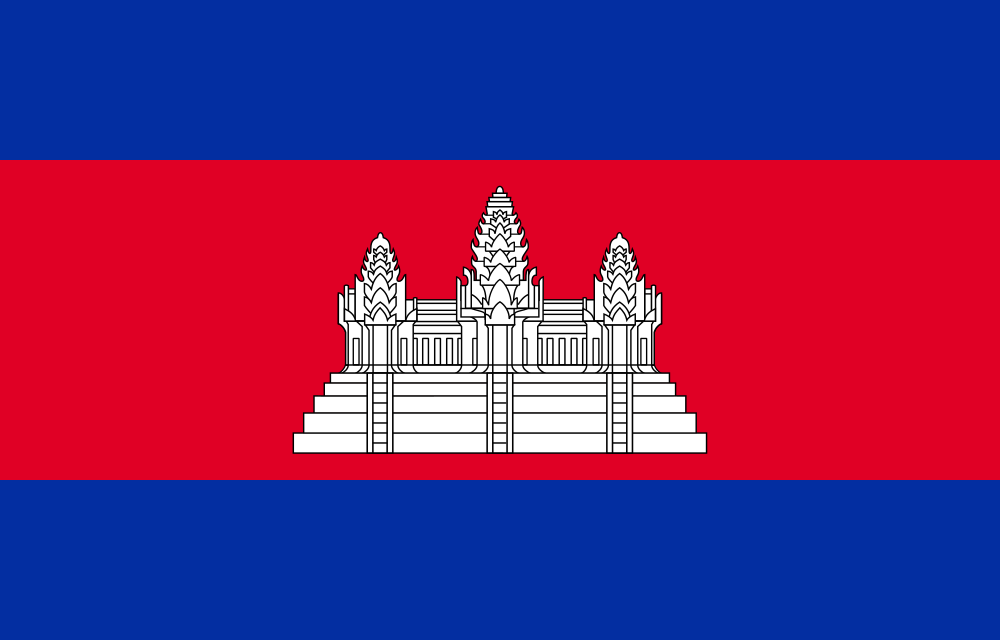
In Cambodia, working on a tourist visa is illegal. Confirm that your employer arranges a genuine work permit and visa before you start.
Argentina has a formal work visa (employer-sponsored, with a signed contract), a Digital Nomad Visa for online earners (proof of at least $1,500 a month in foreign-sourced earnings), and the widely used "Uruguay run": a renewable 90-day tourist visa reset with a short trip across the border. The last one is common, but it is a workaround, not the legal standard.
Brazil offers the VITEM V work visa, which requires a confirmed employment offer, and the VITEM XIV Digital Nomad visa. Repeated tourist-visa extensions to keep working informally carry real legal risk.
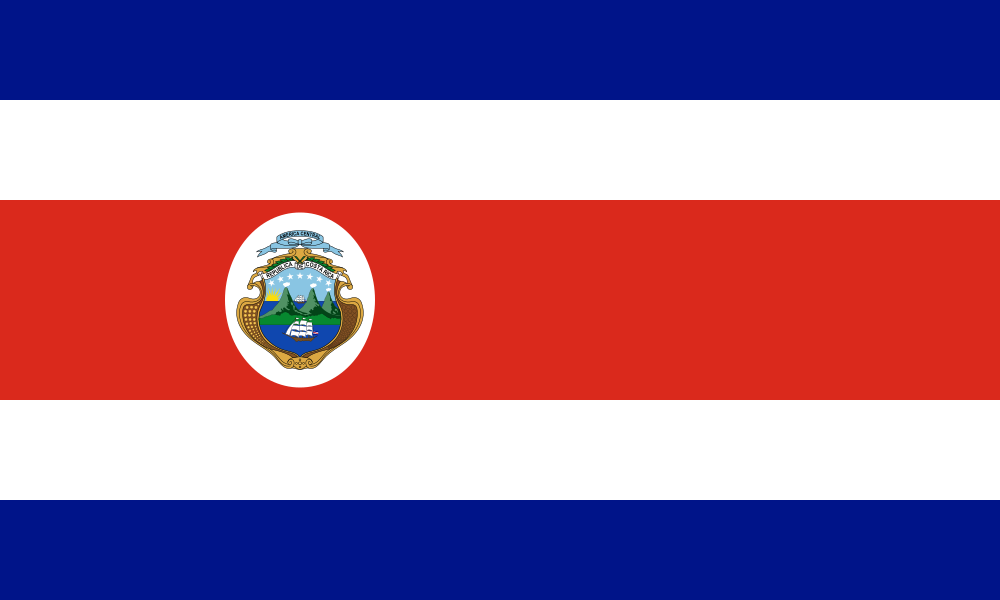
Costa Rica has three tiers: the sponsored Categoría Especial visa (with CCSS healthcare and the annual aguinaldo bonus), tourist visa plus self-employment (a grey area with no healthcare access), and undocumented work, which is the one to avoid entirely.
Every country guide on World Teachers Academy includes a visa section written for South African teachers. Read the one for your destination before you commit.